Short-Form Dramas: Why Episodes Under 15 Minutes Trend in 2025
The rise of short-form dramas, featuring episodes under 15 minutes, is reshaping digital entertainment in 2025 by catering to modern attention spans and mobile consumption, marking a significant shift in how audiences engage with serialized content.
Por: Debora em 4 de novembro de 2025
The rise of short-form dramas, featuring episodes under 15 minutes, is reshaping digital entertainment in 2025 by catering to modern attention spans and mobile consumption, marking a significant shift in how audiences engage with serialized content.
In an era defined by rapid information consumption and dwindling attention spans, The Rise of Short-Form Dramas: Why Episodes Under 15 Minutes Are Trending in 2025 is not just a passing fad but a significant evolution in how we consume serialized storytelling. This trend reflects a profound adaptation to modern lifestyles, offering compelling narratives in bite-sized packages that fit seamlessly into our busy schedules.
The evolution of viewer habits and attention spans
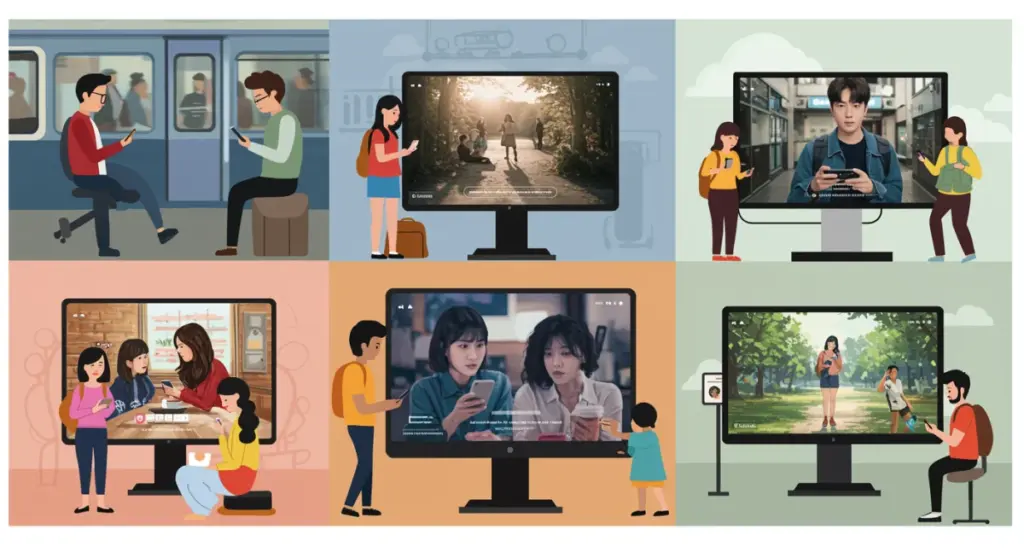
The digital age has fundamentally altered how we engage with content. Our daily lives are punctuated by micro-moments—brief opportunities to consume media while commuting, waiting in line, or during short breaks. This fragmented consumption pattern has created a fertile ground for formats that respect and leverage these limited time slots.
Traditional hour-long dramas, while still popular, demand a significant time commitment that many find increasingly difficult to sustain. Short-form dramas, by contrast, offer immediate gratification and a lower barrier to entry, making them incredibly appealing to a generation accustomed to instant access and rapid content turnover. This shift isn’t just about convenience; it’s about a fundamental change in how our brains process and desire narrative stimulation.
The impact of social media and mobile devices
Instant gratification: Social media platforms have conditioned users to expect immediate access to engaging content. Short-form dramas align perfectly with this expectation, delivering complete narrative arcs or significant plot points within minutes.
Mobile-first consumption: The ubiquitous nature of smartphones means content is often consumed on the go. Short episodes are ideal for quick viewing sessions on mobile devices, transforming commutes and brief waits into entertainment opportunities.
Shareability: Shorter episodes are easier to share and discuss on social media, fostering viral growth and community engagement around specific scenes or plot twists.
The rise of platforms like TikTok and YouTube Shorts has further normalized the consumption of ultra-short video content, inadvertently paving the way for short-form dramas. Viewers are now hardwired to appreciate concise, impactful storytelling, making the transition to short drama episodes a natural progression. This cultural shift underscores a broader preference for efficiency and direct engagement in entertainment.
Ultimately, the transformation in viewer habits is not merely a preference for brevity but a strategic adaptation to the demands of modern life. Short-form dramas provide a flexible and accessible entertainment option, perfectly suited for the contemporary digital consumer who values their time and seeks compelling stories without extensive commitments. This trend is set to continue evolving, influencing future content creation.
Technological innovations driving the trend
Beyond changing viewer habits, technological advancements play a crucial role in enabling and accelerating the growth of short-form dramas. From production to distribution, new tools and platforms are making it easier and more cost-effective to create and deliver high-quality, bite-sized content.
The democratization of production tools, coupled with sophisticated streaming technologies, has lowered the entry barrier for content creators. This means that engaging narratives no longer require multi-million dollar budgets or extensive studio resources, opening the door for diverse voices and experimental storytelling formats.
Advanced streaming and compression
Efficient data delivery: Modern streaming technologies allow for quick loading and smooth playback of short videos, even on slower internet connections. This is critical for mobile users who might be relying on cellular data.
Improved codecs: Advanced video compression algorithms ensure high visual quality without excessive file sizes, making short-form content accessible and enjoyable across a wide range of devices and network conditions.
Personalized recommendations: AI-driven recommendation engines on streaming platforms are becoming increasingly sophisticated, effectively matching short-form dramas with viewer preferences, thus increasing discoverability and engagement.
Furthermore, the development of sophisticated mobile editing software and affordable, high-quality camera equipment has empowered independent creators to produce professional-grade content. This has led to an explosion of diverse short-form series, often characterized by innovative storytelling and a raw, authentic feel that resonates deeply with audiences.
The infrastructure supporting digital content has evolved to favor shorter formats. Platforms are optimized for rapid content uploads and distribution, ensuring that new episodes can reach audiences almost instantaneously. This technological synergy between creation, distribution, and consumption is a key factor in the sustained growth of short-form dramas. It ensures that the ecosystem is robust enough to support the increasing demand for quick, engaging stories.
The business model of short-form content
The economic viability of short-form dramas is a critical factor in their proliferation. While traditional long-form content often relies on subscription models or extensive advertising breaks, short-form content is pioneering new revenue streams and engagement strategies that align with its unique consumption patterns.
Advertisers are increasingly drawn to the short-form format due to its high engagement rates and the ability to integrate native advertising seamlessly. This allows brands to reach audiences in a less intrusive manner, making the advertising experience more palatable for viewers.
Diverse monetization strategies
Brand partnerships and native advertising: Many short-form dramas are funded through direct collaborations with brands, where products or services are integrated into the storyline rather than presented as separate commercials.
Micro-subscriptions and pay-per-episode: Some platforms experiment with models where viewers can pay a small fee for individual episodes or exclusive content, appealing to those who prefer à la carte consumption.
Ad-supported free content: A significant portion of short-form dramas remains free to watch, supported by short, non-skippable ads or sponsored content, maximizing reach and audience acquisition.
The cost-effectiveness of producing short-form content also makes it an attractive venture for studios and independent creators alike. With shorter shooting schedules and often smaller casts and crews, the overheads are significantly lower compared to feature films or traditional television series. This allows for more experimentation and a higher volume of content production, catering to niche interests and diverse demographics.
Furthermore, the data collected from short-form content consumption provides invaluable insights into viewer preferences, allowing platforms and creators to refine their strategies and produce even more targeted and engaging content. This feedback loop ensures a continuously improving and highly responsive entertainment ecosystem. The economic framework supporting short-form dramas is dynamic and adaptive, ensuring its continued expansion.
Narrative techniques in condensed storytelling
Crafting a compelling narrative within a 15-minute timeframe presents unique challenges and opportunities for writers and directors. The art of condensed storytelling requires precision, efficiency, and a deep understanding of pacing and audience engagement. It’s about maximizing impact with minimal exposition.
Unlike traditional dramas that can gradually build character arcs and plot lines, short-form dramas must hook viewers immediately, deliver significant emotional beats quickly, and often conclude with a satisfying, albeit concise, resolution or a compelling cliffhanger that drives continued viewing.
Mastering brevity and impact
Immediate engagement: The opening seconds of a short-form episode are crucial. Creators often employ intriguing visuals, sudden plot twists, or intense character interactions to capture attention instantly.
Lean dialogue and visual storytelling: Every line of dialogue and every visual element must serve a purpose, advancing the plot or revealing character without unnecessary filler. Subtlety and implication often replace overt exposition.
Focused plotlines: Short-form dramas typically focus on one central conflict or character dilemma per episode, avoiding complex subplots that could dilute the narrative’s impact within the limited timeframe.
The emphasis on visual storytelling becomes paramount. A single well-composed shot or a powerful non-verbal performance can convey volumes of information that would otherwise require lengthy dialogue. This pushes creators to be more cinematographically inventive and to rely heavily on the expressive power of their actors.
Moreover, the episodic nature of short-form dramas often means that each episode functions as a mini-story within a larger arc. This requires careful planning to ensure that individual episodes feel complete while also contributing effectively to the overarching narrative. The mastery of these condensed storytelling techniques is what elevates good short-form dramas into truly captivating experiences, demonstrating that quality is not solely determined by length. This approach is revolutionizing narrative construction in the digital age.
The rise of Asian short-form dramas
Asian content creators, particularly from South Korea, China, and Japan, have been at the forefront of the short-form drama phenomenon, leveraging their expertise in compelling storytelling and rapid production cycles. Their success has significantly contributed to the rise of short-form dramas trend globally, especially among younger demographics.
These dramas often excel in delivering high emotional impact and intricate plotlines within their brief runtimes, captivating audiences with their innovative approaches to popular genres like romance, fantasy, and slice-of-life. The cultural nuances and unique storytelling styles further enrich the viewing experience.
Key factors in Asian short-form drama success
Strong narrative hooks: Asian short-form dramas are renowned for their ability to establish compelling premises and character dynamics almost immediately, drawing viewers into the story without delay.
High production value: Despite shorter episodes, many Asian productions maintain impressive cinematography, costume design, and visual effects, rivaling their longer-form counterparts.
Cultural relevance and global appeal: Themes explored in these dramas often resonate deeply with universal human experiences, while also offering a glimpse into diverse cultural contexts, attracting a broad international audience.
Platforms like Viki, WeTV, and YouTube are instrumental in distributing these Asian short-form dramas to a global audience, often with subtitles in multiple languages. This accessibility has fueled their popularity, transforming niche content into mainstream entertainment for millions worldwide. The interactive nature of these platforms also allows for direct engagement between creators and fans, fostering dedicated communities.
The success of Asian short-form dramas serves as a powerful testament to the format’s potential. They demonstrate that profound emotional connections and intricate narratives can be forged in a fraction of the time typically associated with dramatic storytelling. Their influence is undeniable, inspiring creators across the globe to embrace the short-form model and explore its vast creative possibilities. This segment continues to grow, setting industry benchmarks.
Future outlook: What’s next for short-form dramas?
As we look towards the future, the trajectory of short-form dramas appears robust, with continued innovation and expansion on the horizon. The lessons learned from early pioneers and the evolving technological landscape suggest a dynamic future where brevity and impact will remain key.
Expect to see further integration of interactive elements, allowing viewers to influence plot points or choose different narrative paths, enhancing engagement and personalization. This evolution will blur the lines between traditional viewing and interactive experiences, making each episode unique.
Emerging trends and predictions
Increased personalization: AI will play an even larger role in tailoring content recommendations and potentially even generating personalized plot variations based on viewer preferences and past watch history.
Cross-platform integration: Short-form dramas will increasingly leverage multiple platforms, using social media for supplementary content, character backstories, and interactive fan engagement that extends beyond the core episodes.
Hybrid formats: We may see an emergence of hybrid formats that combine short-form episodes with occasional longer specials or interactive experiences, offering a layered approach to storytelling that caters to different levels of viewer engagement.
The investment in short-form content by major streaming services is likely to intensify, as they recognize its potential to attract and retain younger audiences. This will lead to higher production budgets and an even greater diversity of genres and storytelling styles within the short-form sphere. The competition among creators will drive innovation, pushing the boundaries of what can be achieved in under 15 minutes.
Ultimately, the future of short-form dramas is bright and full of potential. As technology advances and viewer habits continue to evolve, this format is perfectly positioned to adapt and thrive, offering a flexible, engaging, and highly accessible form of entertainment for the global audience. The continuous evolution promises even more exciting and immersive storytelling experiences. This progressive trend is set to redefine entertainment consumption for years to come.
Key Trend
Brief Description
Viewer Habit Evolution
Modern audiences prefer bite-sized content due to fragmented attention spans and mobile-first consumption, driving demand for quick, engaging stories.
Technological Advancements
Improved streaming, compression, and accessible production tools facilitate high-quality, efficient creation and distribution of short-form content.
Innovative Business Models
Monetization through brand partnerships, micro-subscriptions, and ad-supported models makes short-form dramas economically viable and attractive.
Condensed Storytelling
Creators master immediate engagement, lean dialogue, and focused plots to deliver impactful narratives within brief durations.
Frequently asked questions about short-form dramas
What defines a short-form drama?▼
A short-form drama is typically a serialized video series where each episode runs for a duration of under 15 minutes. These dramas are designed for quick consumption, often optimized for mobile viewing, and deliver concise, impactful storytelling to fit into modern, busy lifestyles.
Why are short-form dramas gaining popularity now?▼
Their popularity stems from evolving viewer habits, including shorter attention spans and increased mobile content consumption. They offer instant gratification and flexibility, allowing viewers to enjoy compelling stories during brief breaks or commutes, aligning with digital-era expectations.
Are short-form dramas lower quality than traditional dramas?▼
Not necessarily. While shorter, many short-form dramas maintain high production values, especially Asian productions. Creators use condensed storytelling techniques, focusing on immediate engagement and visual impact to deliver compelling narratives efficiently, challenging the notion that length equates to quality.
How do short-form dramas make money?▼
They employ diverse monetization strategies, including brand partnerships and native advertising, micro-subscriptions or pay-per-episode models, and ad-supported free content. These methods leverage the format’s high engagement and cost-effective production to ensure economic viability.
What can we expect from short-form dramas in the future?▼
The future holds increased personalization through AI, deeper cross-platform integration, and the emergence of hybrid formats combining short episodes with longer specials. These innovations aim to enhance viewer engagement and offer more diverse, tailored storytelling experiences.
Conclusion
The phenomenon of short-form dramas, with episodes under 15 minutes, is far more than a fleeting trend; it represents a fundamental shift in the landscape of digital entertainment. Driven by evolving viewer habits, technological advancements, and innovative business models, these concise narratives are perfectly suited for the demands of modern life. As we move further into 2025, the continued growth and innovation within this segment promise an exciting future for storytelling, proving that compelling drama can indeed come in small, powerful packages that resonate deeply with a global audience.